
You wake up with a mental list of things to do. On the way to work, you remember two more. When you arrive, you get an email with a third urgent one. In the middle of the afternoon, you realize you completely forgot something you promised to deliver. And, at the end of the day, when you finally sit down to rest, the feeling is that you ran all day long — but could not finish what really mattered.
This scenario is so common that most people think it is normal. They think it is just "modern life being busy". But it is not. It is the direct consequence of trying to manage dozens of tasks with a tool that was not made for it: memory.
Human memory is excellent for many things. Keeping names, faces, stories, sensations. But it is terrible at managing lists. It forgets, mixes things up, prioritizes wrong and gets overloaded. When you rely only on your head to remember everything you need to do, the result is always the same: important things slip through, deadlines blow up, and anxiety accumulates.
The Real Cost of Living on Improvisation
The problem with managing tasks in your head is not just forgetting things. It is the invisible effort you make all the time not to forget. It is the brain working in the background, reminding you every few minutes that there is something pending. It is the famous "I have the feeling I forgot something", which accompanies many people from breakfast until bedtime.
This effort has a name: cognitive load. And the more tasks you try to keep in your head, the bigger it gets. The bigger it gets, the smaller your ability to concentrate on what you are doing. The smaller your productivity. The greater your exhaustion.
The practical effect is well known. Missed deadlines. Forgotten commitments. Tasks that pile up until they become a scary stack. Meetings where you have to pretend you remembered everything. And that feeling, increasingly frequent, that the day went by and you could not do what really mattered — you only put out fires.
After a few weeks of living like this, silent exhaustion appears. The kind that does not come from working too much, but from working without control. From feeling that the day decides what you will do, and not the other way around.
An Agenda That Works for You
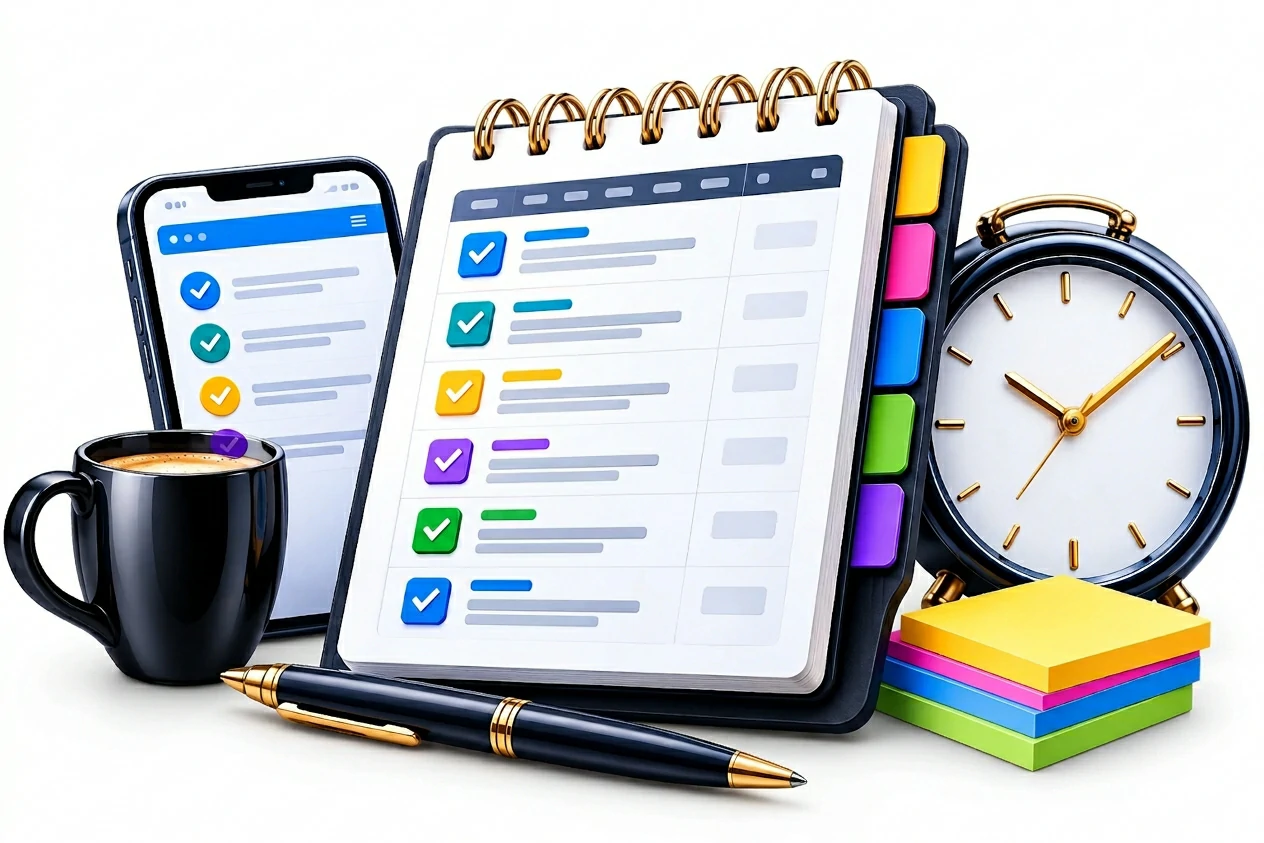
It was exactly to solve this that we created the Task and Daily Activities Agenda Spreadsheet.
Instead of relying on memory, you now have a single place to record everything you need to do. Each task has a description, due date, responsible party and status. Simple as that. But the impact of this simplicity is enormous.
From the moment you record a task, it stops occupying mental space. Your brain understands that it is already stored in some reliable place and releases the energy it was using not to forget. That energy goes back to what really matters: doing.
The spreadsheet also allows you to set priorities, mark what has already been completed and quickly visualize what is still pending. You start to have a clear view of your day — and no longer a diffuse feeling that you have "a lot to do".
What Changes When You Organize Your Tasks
Those who start using a well-structured task agenda report changes that go far beyond what they expected:
- Fewer forgettings. Because everything is recorded in a reliable place, not in memory.
- More clarity. You know exactly what you need to do today, tomorrow and next week.
- Less anxiety. The brain stops working in "constant alert" mode.
- More focus. Without the weight of remembering everything, you can concentrate on what you are doing.
- Valuable history. Over time, you notice patterns: which tasks always get delayed, which days are more productive, where your bottlenecks are.
There is also a less obvious and perhaps deeper gain. By recording your tasks instead of just trying to remember them, you begin to realize how much you actually do. That feeling of "I did nothing today" is replaced by a concrete view of what was accomplished. And that changes the way you relate to your own work.
The First Step Is Simpler Than It Seems
Maybe you are thinking: "I have tried agendas before, it never worked". Or: "my routine is too unpredictable for a spreadsheet". These are common objections, and they make sense. Most agendas fail because they are too complicated. Too many fields, too many rules, too many clicks. They require you to change everything at once — and the change does not sustain itself.
Ours is not like that. It was designed to be used for real, in daily life, without bureaucracy. Each field responds to a real need. Each feature solves a concrete problem. And the result is a lightweight tool, which you adopt because it makes life easier — not because someone ordered it.
If you have recognized any of the scenarios described in this text — forgotten tasks, blown deadlines, the constant feeling of putting out fires — it is probably time to take the first step.
Get to know the Task and Daily Activities Agenda Spreadsheet, see how it works and imagine the impact it would have on your routine. Sometimes, the difference between a day that passes you by and a day you command lies exactly in this kind of decision.